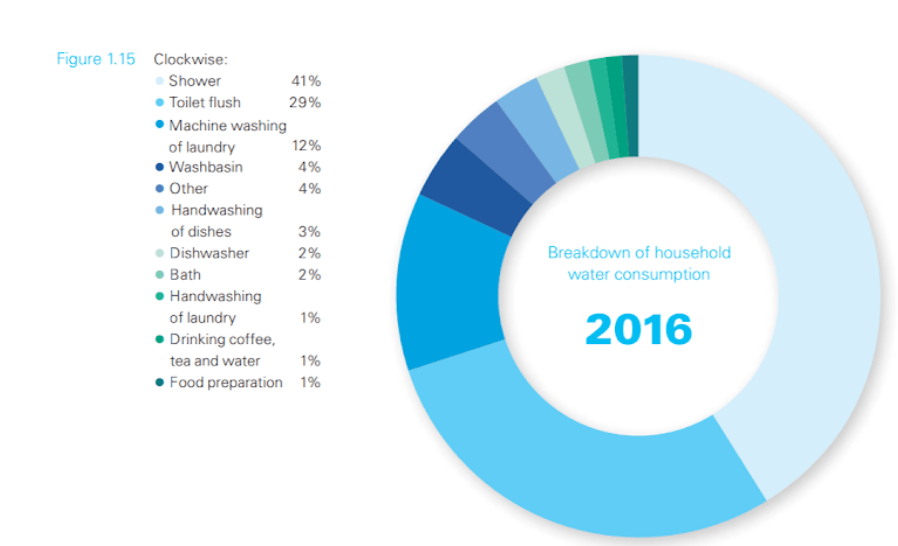
Humans use over half of all accessible water runoff. Of total water use less than 10% is used for domestic use. Households are the smallest consumers of water, but have a large potential impact. Daily water usage can be needed in toilets, shower, faucet, washing machine, leaks, bath, dishwasher, leaks and more. Some of these end uses are detectable (and measurable) while others are more difficult to measure. Managing these consumptions can reduce the impact of over-usage in the carbon footprint. The methods include Turning off the water while we are not using it at the moment; not running dishwashers until it is s full; Installing a dual-flush toilet; Adding water tap aerators; installing a water-efficient Purchase energy- and water-efficient appliances; Purchase energy- and water-efficient appliances and Checking for leaks.
According to studies, switching to water-saving fixtures and appliances can reduce indoor water use by twenty percent. Newer bathroom fixtures and appliances like toilets, shower heads and faucets are designed to be more water-efficient than older models and can save hundreds of gallons a month. Yet, reducing household water use in developing nations can improve households’ ability to meet their needs, and greatly improve quality of life.
Amir Lale /140120109
 ECO EFFICIENT HOUSE